
Taco Dream In Peoria

CitiSlicker Small Business Motivational, Fictional Stories Based on Central Illinois Facts.
By Ron Wallace
Taco Dream In Peoria
A STORY OF FAMILY, RESILIANCE, AND THE
UNWAVERING PURSUIT OF AN AWAKEND HEART.
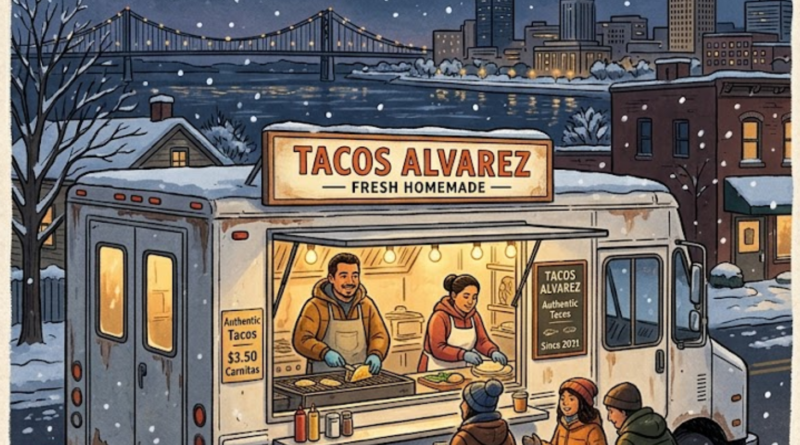
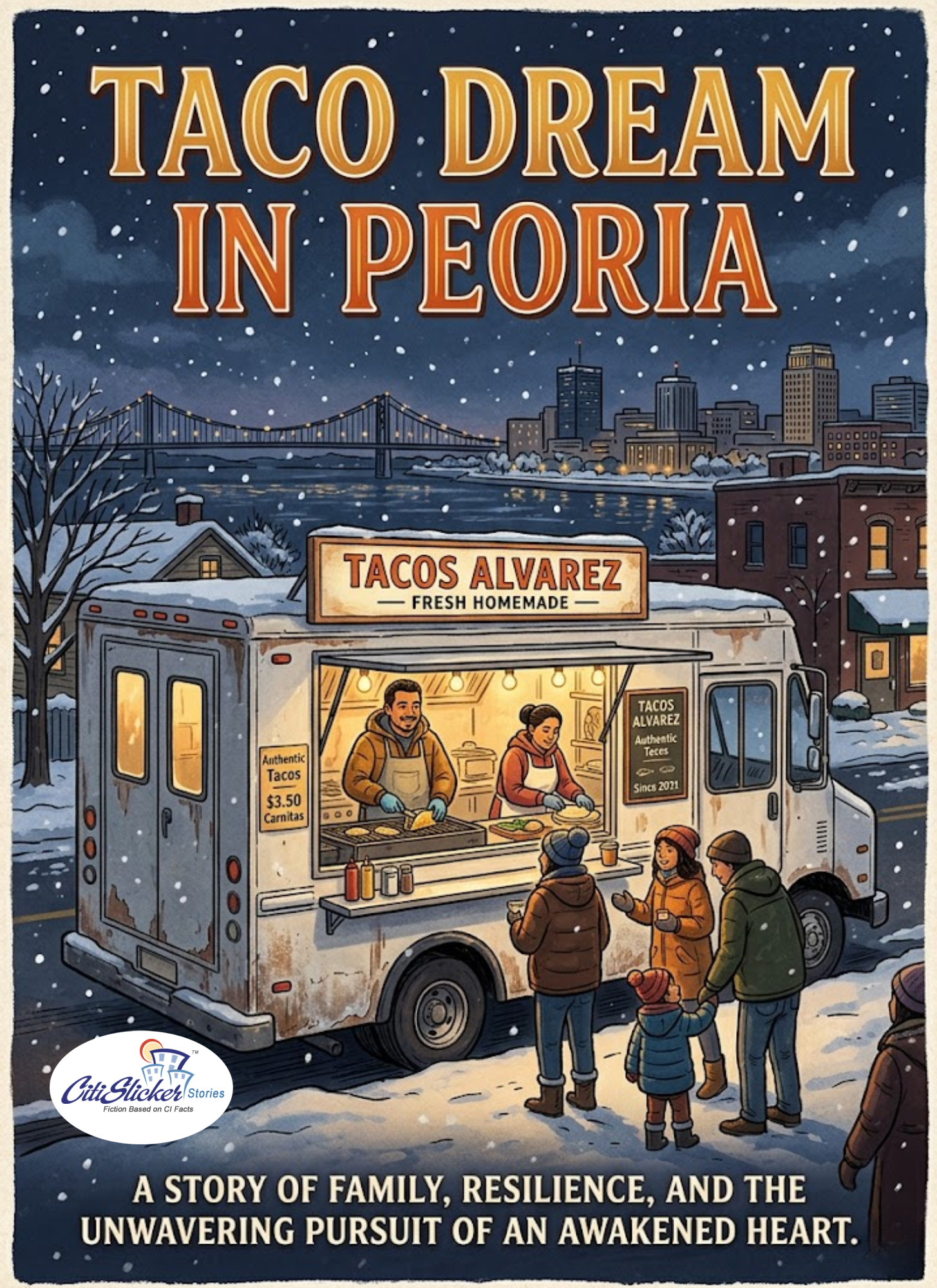
The first time Mateo Alvarez parked his aging white food truck along the edge of a quiet street in Peoria, Illinois, the wind cut through his jacket like a blade. It was early spring, but Central Illinois weather didn’t care about calendars. The sky hung low and gray, and the Illinois River breeze carried a damp chill that settled into his bones. He stepped out of the truck, rubbed his hands together, and looked at the handwritten sign taped to the side window: “Tacos Alvarez — Fresh Homemade.” The ink had smudged slightly from condensation, but the words still carried hope.
Inside the truck, his wife Rosa carefully arranged containers of chopped cilantro, diced onions, and marinated pork. The aroma filled the cramped space, warm and comforting despite the cold outside. Their two children, Sofia and Luis, sat bundled in the front seat of their old SUV parked nearby, finishing homework before school. This wasn’t how Mateo imagined starting a business, but it was the only way he knew how to begin.
Years earlier, Mateo had worked long shifts at a meat processing plant just outside Peoria. The job paid enough to cover rent and groceries, but little else. Every day, he returned home exhausted, hands sore, shoulders stiff, and dreams tucked quietly into the corners of his mind. Rosa worked part-time cleaning offices at night, often leaving after dinner and returning just before dawn. They lived carefully, counting every dollar, saving coins in an old glass jar labeled “Sueño” — Dream.
The dream was simple: share the food they loved with their community. Back in Mexico, Rosa’s grandmother had taught her how to prepare slow-cooked carnitas that melted in your mouth, tortillas pressed fresh by hand, and salsa recipes passed down through generations. Mateo often joked that Rosa’s cooking was better than anything he’d ever tasted at restaurants in Illinois. Friends and neighbors agreed. Whenever Rosa cooked for gatherings, people lingered near the kitchen, asking questions and requesting recipes. That’s when the idea first sparked.
But ideas didn’t pay bills. Mateo hesitated for years, unsure if leaving stable work for an uncertain business was wise. Everything changed the day the factory announced layoffs. Mateo was called into a small office, handed paperwork, and told his position was no longer needed. He drove home that afternoon in silence, gripping the steering wheel so tightly his knuckles turned white. Fear crept into every thought—rent, food, school supplies, winter heating bills.
That evening, he sat at the kitchen table while Rosa prepared dinner. The children whispered nearby, sensing tension. Mateo finally spoke, his voice low. “They let me go today.”
Rosa paused, her hands still. For a moment, the room fell quiet except for the gentle sizzle of food on the stove. Then she turned, looked him in the eyes, and said softly, “Maybe this is the moment we’ve been waiting for.”
Mateo frowned, confused. Rosa walked to the shelf and grabbed the old glass jar. It was heavier than he remembered. She poured the coins onto the table, followed by folded bills hidden between the layers. “We saved this for a dream,” she said. “Maybe it’s time to use it.”
Within weeks, Mateo and Rosa began researching food trucks. They spent late nights scrolling through listings on their old laptop, calculating costs, comparing permits, and reading regulations. The numbers scared them, but not as much as doing nothing. Eventually, they found a used truck in nearby Bloomington. The paint was chipped, the engine old, and the interior cramped, but it was affordable.
Buying that truck drained nearly all their savings. Mateo spent days repairing small mechanical issues, learning from online videos and advice from neighbors. Rosa tested recipes repeatedly, adjusting spice levels to suit local tastes without losing authenticity. They experimented with menus, debating which dishes would sell best.
When opening day arrived, the sky threatened rain. Mateo parked near a small industrial park, hoping workers would stop by during lunch. Hours passed with little activity. Only two customers came that first day—one curious passerby and a truck driver who ordered three tacos and left without much conversation.
That night, Mateo counted the earnings: fourteen dollars.
He sat quietly at the kitchen table, staring at the small stack of bills. Rosa placed a hand on his shoulder. “Every business starts somewhere,” she said gently. “Tomorrow will be better.”
Tomorrow wasn’t much better, but slowly, things began to change. A construction crew working nearby became regular customers. One worker told others about the tacos, praising the flavor and portion sizes. Word spread through small conversations and social media posts. Customers began snapping photos and sharing them online, tagging the truck’s simple name.
Summer arrived, bringing longer days and warmer weather. Lines formed occasionally, especially during lunch hours. Mateo learned to move faster, assembling tacos with practiced precision. Rosa managed ingredients, ensuring freshness and consistency. Sofia and Luis helped after school, handing napkins and greeting customers with shy smiles.
Then came their first Central Illinois winter as food truck owners.
Snow fell heavily that December, blanketing streets and freezing water pipes across the city. The cold seeped into every corner of the truck, making work slow and painful. Customers were fewer, often choosing to stay indoors rather than brave icy sidewalks. Some days, Mateo stood outside for hours with no orders.
One particularly harsh morning, the temperature dropped below zero. Mateo tried starting the truck, but the engine coughed and refused to turn over. He tried again and again, breath forming clouds in the freezing air. Finally, he slumped against the side of the vehicle, defeated.
Rosa stepped outside, wrapping her scarf tighter around her neck. “We can’t quit now,” she said. “We’ve come too far.”
Repair costs hit them hard that winter. Savings disappeared faster than expected. Mateo took small side jobs fixing fences and clearing snow just to keep the business alive. Rosa experimented with new menu items suited for cold weather, adding warm soups and hot chocolate to attract customers.
One afternoon, a local journalist stopped by the truck after hearing about it from a friend. She ordered tacos, chatted with Rosa, and asked questions about their journey. Weeks later, a feature story appeared in a community newspaper titled “Family Brings Authentic Flavor to Local Streets.”
Everything changed after that.
Customers arrived in larger numbers, curious about the story behind the truck. Lines stretched down sidewalks during lunch hours. Families visited on weekends, eager to support a local business with heart. Mateo began recognizing familiar faces, greeting them by name.
By their third year, the truck had become a known favorite around town. But Mateo felt something deeper stirring—a new dream growing quietly in his mind. One evening, after closing, he drove past a small vacant building downtown Peoria. The windows were dusty, and the sign above the door hung crooked. Yet something about it felt right.
He parked and stepped out, staring at the space. Rosa joined him, eyes scanning the empty interior through the glass.
“Imagine tables here,” she said softly. “A kitchen in the back. Families sitting together.”
Mateo nodded, heart racing. “A real restaurant.”
Opening a restaurant required more money than they had, but years of consistent work had built trust with customers and lenders. With careful planning, small loans, and community support, they began renovations. Mateo painted walls late into the night while Rosa designed menus and decorations inspired by their heritage.
Months later, the doors finally opened.
The first day inside their new restaurant felt surreal. Bright colors decorated the walls, music played softly in the background, and the smell of fresh tortillas filled the air. Customers poured in, many of them familiar faces from the food truck days. Some hugged Rosa. Others congratulated Mateo, proud to see how far they’d come.
Sofia and Luis, now older, helped serve drinks and clear tables. The family moved through the space with confidence, working as a team built on years of struggle and resilience.
Business wasn’t perfect every day. There were slow afternoons, unexpected expenses, and stressful decisions. But the difference was clear—they had stability, space, and a place customers could call their own.
One evening, Mateo stepped outside after closing, standing on the sidewalk as the downtown lights glowed warmly around him. Snow began to fall gently, covering the streets in quiet beauty. He remembered the freezing mornings beside the food truck, the days when fourteen dollars felt like failure, and the nights when quitting seemed easier than continuing.
Rosa joined him, slipping her hand into his. “Do you remember that first winter?” she asked.
Mateo laughed softly. “How could I forget?”
They stood together in silence, watching snowflakes drift through the air. Inside the restaurant, chairs rested neatly on tables, and the smell of cooked food lingered faintly in the air.
“This place,” Rosa whispered, “it started with a dream in a jar.”
Mateo looked up at the restaurant sign glowing above them—Tacos Alvarez—and felt a deep sense of gratitude settle into his chest. The journey hadn’t been easy. It had been filled with doubt, cold mornings, long nights, and moments when everything seemed impossible.
But step by step, taco by taco, winter by winter, they had built something lasting.
Not just a business.
A future.
As we — Imagine This — we have to stretch our imagination a bit. For Mateo to park near a small industrial park without preauthorization wouldn’t be allowed long. It does happen. These trucks are in medical center parking lots, in business lots and even in gas stations for people to purchase a quick snack or lunch. Small restaraunts downtown Peoria don’t last very long. Mateo would be better off considering a small city outside of Peoria or one of the side streets like Sheridan in a nice cozy corner.
Otherwise, there is a lot of truth in Mateo’s journey.