The Bakery That Didn’t Close

CitiSlicker Small Business Motivational, Fictional Stories Based on Central Illinois Facts.
By Ron Wallace
The Bakery That Didn't Close
A STORY OF FAMILY, RESILIANCE, AND THE
UNWAVERING PURSUIT OF AN AWAKENED HEART.
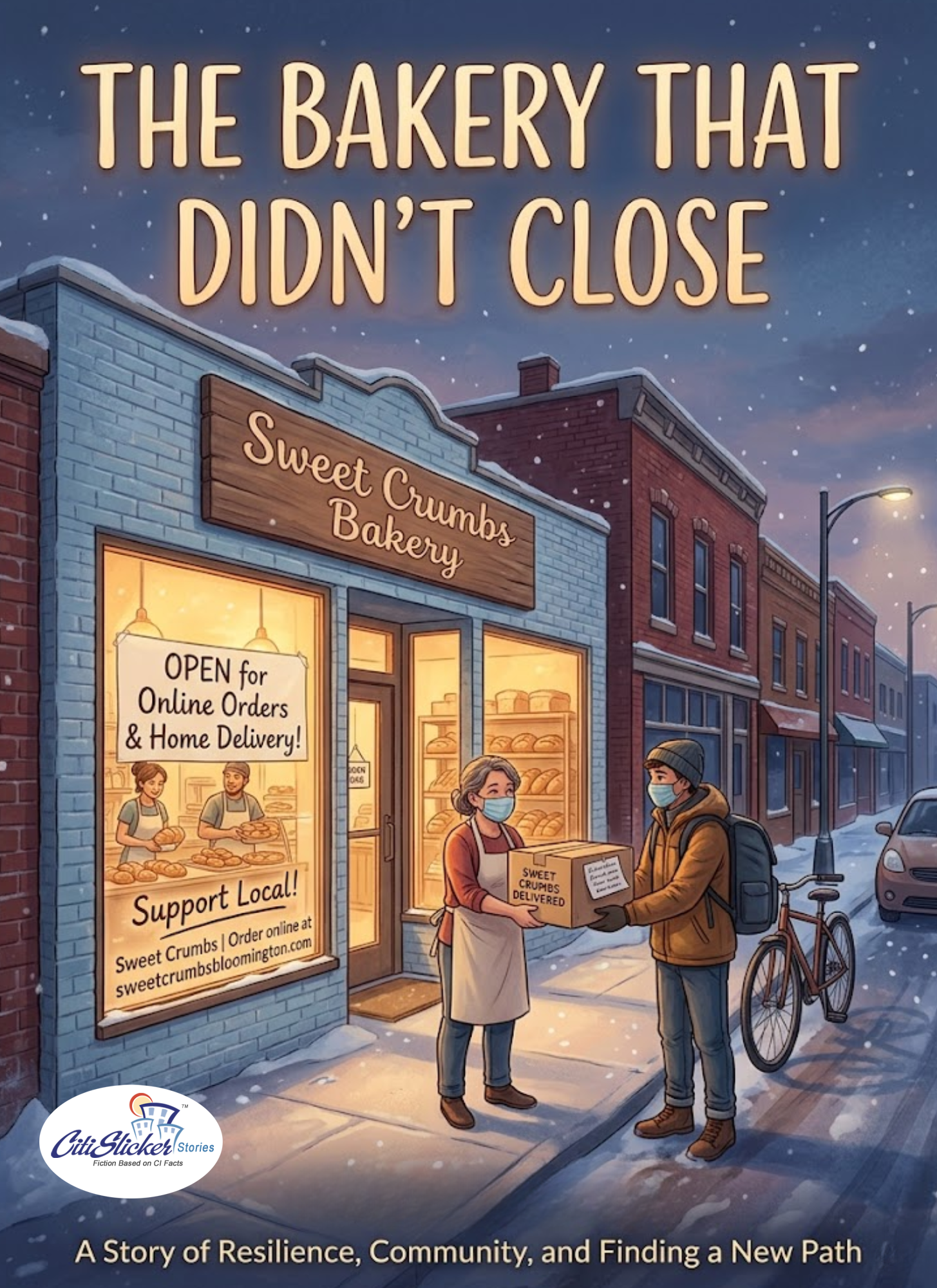
On a quiet street in Bloomington, Illinois, there stood a small bakery with pale blue walls and a wooden sign that read Sweet Crumbs Bakery. Every morning before sunrise, warm light glowed through its windows, and the smell of fresh bread drifted into the chilly Central Illinois air. For years, neighbors woke to that comforting scent, knowing Emma Carter was already inside, kneading dough with steady hands.
Emma had opened the bakery eight years earlier, long before anyone had heard the word “pandemic.” Back then, it was nothing more than a dream and a risky loan from a local bank. She had left a stable office job—something her family thought was foolish—to follow her love for baking. People warned her that small bakeries rarely lasted. They said rent was too high, ingredients too expensive, and competition too strong.
But Emma believed in simple things: fresh ingredients, honest recipes, and consistency.
In the early years, she worked alone, waking at 3:30 each morning to prepare dough before sunrise. She baked loaves of sourdough, trays of cinnamon rolls, and delicate pastries dusted with powdered sugar. Some mornings, she cried quietly while measuring flour, exhausted and afraid she had made a terrible mistake.
Still, customers slowly arrived.
At first, it was just a few neighbors. Then teachers from nearby schools began stopping in for coffee and muffins. Soon, families made it part of their morning routine. Children pressed their noses against the glass display case, pointing at frosted cupcakes. Emma remembered their names, their favorite flavors, and sometimes even their birthdays.
By 2019, Sweet Crumbs Bakery had become a beloved local spot. Emma had hired three employees: Lisa, who specialized in decorating cakes; Jordan, who handled early morning bread batches; and Maria, who managed the front counter. The shop buzzed with conversation, laughter, and the soft hum of ovens working nonstop.
Emma allowed herself to feel proud. After years of struggle, things were finally steady.
Then came early March 2020.
At first, the news felt distant—stories about a virus spreading in other states, warnings about public gatherings, discussions about closures. Emma listened but didn’t panic. Businesses had survived difficult times before. She assumed things would pass quickly.
But within weeks, everything changed.
Schools shut down. Offices emptied. Streets grew quieter each day. Customers stopped coming.
One morning, Emma stood behind the counter watching the clock tick past 9:00 a.m.—usually the busiest hour. That day, not a single customer walked through the door. The display case remained full, untouched pastries slowly losing freshness.
Lisa approached her cautiously. “Maybe people are staying home,” she said, trying to sound hopeful.
Emma nodded, but unease tightened her chest.
Days turned into weeks. Sales dropped dramatically. Bread that once sold out by noon now sat unsold until closing time. The bakery’s daily rhythm collapsed into silence.
Then came the announcement that broke Emma’s heart: indoor dining restrictions.
Without foot traffic, the bakery’s income nearly vanished.
One evening, after closing, Emma sat alone at a small wooden table near the back of the shop. The lights above flickered softly. In front of her lay a notebook filled with numbers—rent, payroll, utilities, ingredients. She ran calculations again and again, hoping the outcome would change.
It didn’t.
If things continued this way, the bakery would close within two months.
That night, Emma drove home in silence. The streets of Bloomington felt unfamiliar—empty, quiet, uncertain. She barely slept, staring at the ceiling while fear filled her thoughts. Years of work, sacrifice, and risk—all slipping away because of something she couldn’t control.
The next morning, she gathered her employees before opening.
Lisa leaned against the counter, arms folded. Jordan stood near the ovens, and Maria watched anxiously from the front register.
Emma took a deep breath. “We might have to close,” she admitted quietly.
No one spoke at first.
Maria’s eyes filled with tears. “But this place… it means everything to the neighborhood.”
Jordan shook his head slowly. “There has to be another way.”
Emma wished she believed that.
For several days, she searched online late into the night, reading about struggling businesses across the country. Restaurants closing. Shops shutting down permanently. Families losing livelihoods overnight.
Then one evening, she noticed something interesting while scrolling through social media.
A bakery in another state had begun offering online ordering and home delivery. Customers placed orders through a simple website, and drivers delivered baked goods directly to their doors.
Emma paused.
She had never sold online before. Her bakery relied entirely on walk-in customers. The idea of building an online system felt overwhelming. She didn’t know anything about websites, delivery logistics, or digital marketing.
But doing nothing meant certain closure.
The next day, she called her employees together again.
“I think we try something new,” she said cautiously. “Online orders. Delivery.”
Lisa raised an eyebrow. “You mean… people order from home?”
Emma nodded. “Yes. We package everything fresh and deliver.”
Jordan hesitated. “We don’t even have delivery drivers.”
“I know,” Emma admitted. “But we can figure it out.”
Those words—we can figure it out—became their quiet promise.
Over the next week, the bakery transformed into a workshop of trial and error. Emma asked a local college student for help building a simple website. It wasn’t fancy—just photos, descriptions, and an order form—but it worked.
Lisa redesigned packaging to keep pastries fresh during transport. Jordan adjusted baking schedules to match delivery times. Maria managed customer calls, explaining the new system to anyone who asked.
The first online order arrived late one evening.
Emma stared at the notification on her laptop, barely believing it.
Two dozen cinnamon rolls. One chocolate cake. Delivery scheduled for Saturday morning.
She called the team immediately.
“We got one,” she said, voice trembling.
They celebrated that single order like it was a thousand.
Saturday morning arrived cold and gray. Emma carefully packed each item into sturdy boxes, adding handwritten thank-you notes inside. She drove the delivery herself, navigating unfamiliar streets with nervous determination.
When she rang the customer’s doorbell, a young mother answered with a tired but grateful smile.
“I can’t tell you how much this means,” the woman said. “My kids haven’t had fresh bakery treats in weeks.”
Emma drove back to the shop with tears in her eyes—not from sadness, but from relief.
Orders slowly increased.
At first, there were only five per week. Then ten. Then twenty. Customers began sharing photos of their deliveries online, tagging Sweet Crumbs Bakery in posts filled with appreciation,
Neighbors who once visited the shop in person now supported it from home.
Emma noticed something unexpected—delivery allowed them to reach customers beyond their usual walking distance. Families from nearby towns began placing orders. Birthday cakes, anniversary cupcakes, and weekend brunch boxes became popular.
Still, the road wasn’t smooth.
There were mistakes—wrong addresses, melted frosting, delayed deliveries during snowstorms.
Some nights, Emma stayed late fixing problems and rewriting schedules.
But each challenge taught them something new.
By summer, the bakery’s online system was running smoothly. Emma hired part-time drivers and expanded delivery hours. The website improved with professional photos and seasonal promotions.
For the first time in months, hope replaced fear.
One afternoon, Emma stood near the ovens watching trays of fresh bread rise in the heat. The familiar smell filled the air again—warm, comforting, alive.
Lisa walked over, wiping flour from her hands. “Remember when we thought this place was finished?”
Emma smiled softly. “I remember.”
Jordan joined them, holding a clipboard filled with delivery orders. “We’ve got fifty deliveries tomorrow,” he announced proudly.
Emma blinked in disbelief. Fifty.
That number would have seemed impossible months earlier.
By late 2020, Sweet Crumbs Bakery had stabilized. The shop reopened for limited in-person service, but online orders remained strong. Customers loved the convenience of home delivery, and many continued using it even after restrictions eased.
The bakery had not only survived—it had evolved.
One winter morning, Emma unlocked the front door before sunrise, just like she had done for years.
Snow covered the sidewalks, glowing softly under streetlights. Inside, ovens warmed the air, filling the room with the scent of cinnamon and butter.
She paused for a moment, standing quietly in the doorway.
There had been nights when she believed this place would disappear forever. Nights filled with anxiety, doubt, and exhaustion. Yet somehow, through creativity, teamwork, and stubborn determination, they had found another path.
Later that day, a customer approached the counter holding a delivery box.
“I just wanted to say thank you,” the woman said. “During lockdown, your bakery deliveries were the highlight of our week.”
Emma felt her throat tighten.
She hadn’t just saved a business.
She had preserved a piece of community.
That evening, after closing, Emma turned off the bakery lights and stepped outside. The sky above Bloomington shimmered with winter stars, and the street lay quiet beneath fresh snow.
She looked back at the blue walls and wooden sign—Sweet Crumbs Bakery—and allowed herself to breathe deeply.
There would always be challenges ahead. New uncertainties. Unexpected obstacles.
But now she knew something important.
Sometimes survival didn’t mean holding on to the old way of doing things.
Sometimes survival meant learning something new, trusting your instincts, and finding courage in moments when fear felt overwhelming.
And sometimes, the difference between closing forever and staying open… was the decision to try one more idea.